
Digital Signature vs eSignature vs Aadhaar eSign Explained

Nowadays enterprises and individuals are increasingly abandoning paper worksheets. The traditional signing process typically require print out the documents, sign them by hand, scan, and then mail back via email or courier. It is a lengthy process that holds up approvals, adds to operating expenses and makes it difficult to keep track of documents.
As organizations shift towards digital workflows, document signing methods have evolved too. Modern signing options are indispensable for documentation modernization, allowing for enhanced speed of approvals, increased visibility, and better compliance.
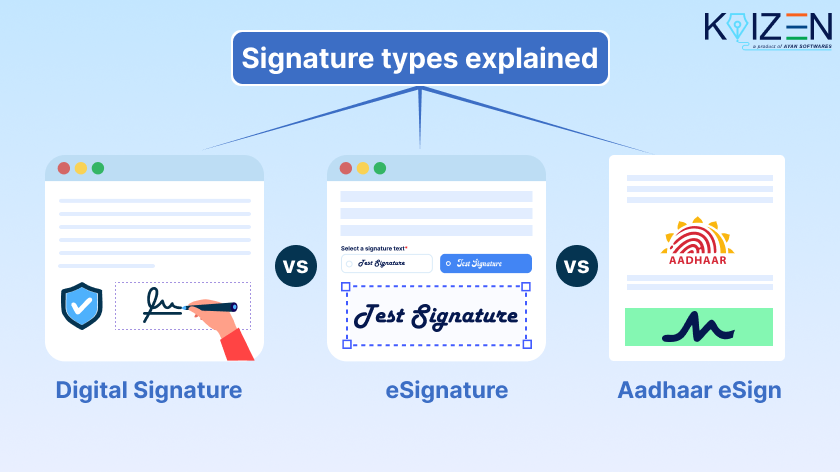
In this regard, there are three terms that are often mentioned, Digital Signature, eSignature and Aadhaar eSign. But while they are related, they’re not equal. Each has a different function, a different signing process, and a different level of security and validation.
This blog clearly explains what Digital Signature, eSignature, and Aadhaar eSign is and their key concepts and differences in a more structured manner.
What Is an eSignature?
An eSignature (Electronic Signature) is a general term that refers to any electronic method that shows the intention of a person to sign the contents of a document. The signer signs electronically rather than on pen and paper.
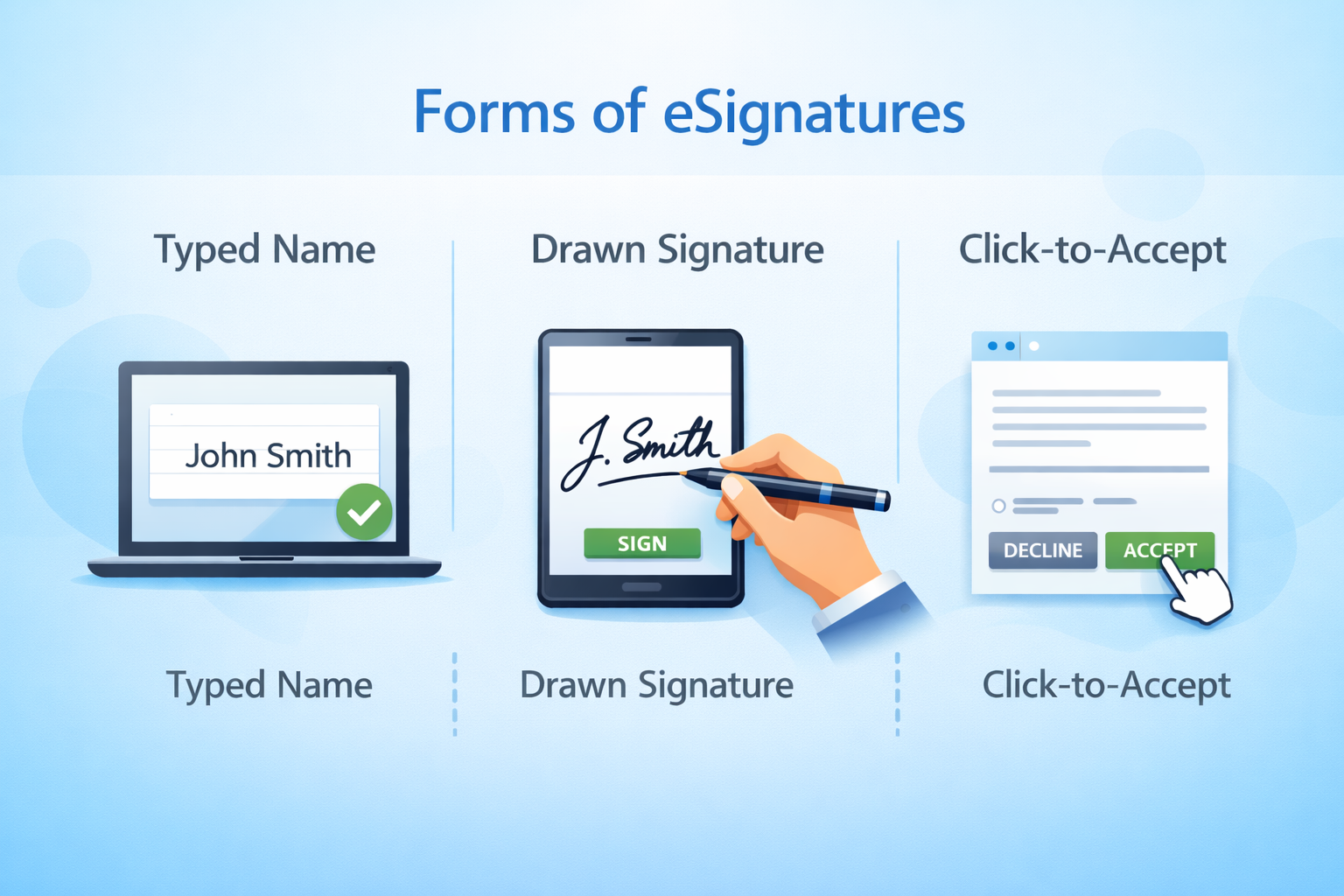
An eSignature can appear in several forms, including:
- A typed name added to a document
- A signature drawn with a mouse, stylus, or on a touchscreen
- A scanned image of a handwritten signature
- Clicking an “Accept” or “I Agree” button on a digital document
What defines an eSignature is not its appearance, but the intent behind it. If the signer expresses a clear intent to agree to the document and the system captures this intent, then that is considered an electronic signature.
eSignatures have become popular mainly because they are user friendly, fast and easy to implement. They help organizations reduce paperwork while keeping document workflows moving smoothly.
Everyday many online actions, such as approving policies or accepting terms and conditions, are legally considered eSignatures because they demonstrate clear user consent.
What Is a Digital Signature?
A Digital Signature is nothing but a Secure Type of E-signature. Digital signatures use cryptographic technology to prove the identity of the signer and ensure the document has not been altered, unlike regular eSignatures.
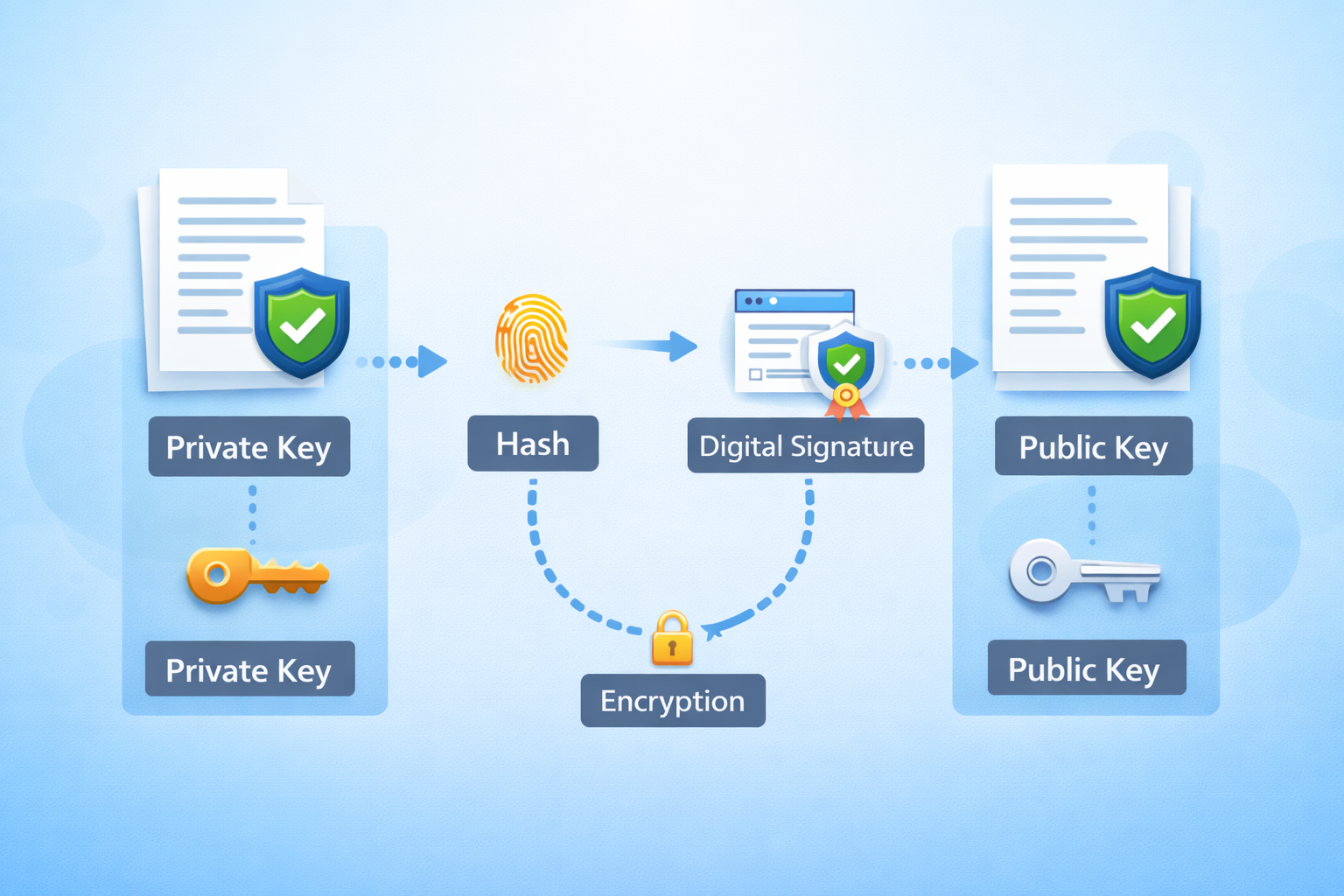
Digital signatures are generated using Public Key Infrastructure (PKI).This involves two keys:
- A private key, used by the signer
- A public key, used to verify the signature
When signing a document electronically, a unique digital fingerprint (hash) is created. This hash is encrypted with the private key of the signer. Then, any recipient can verify the signature with the public key associated to the signer’s digital certificate.
This process ensures:
- The signer’s identity is authenticated
- The document content remains unchanged
- The signature cannot be denied later
As a result of this high level of trust, digital signatures are commonly used for confidential or regulated documents.
Any change, even a minor one like an additional space or character, in a digitally signed document will immediately cause the signature to become invalid.
What Is Aadhaar eSign?
Aadhaar eSign is a kind of paperless digital signing process, it was introduced in India with an aim to enable broad based population for e signing. It enables an individual to digitally sign a document using his Aadhaar number, without the requirement of a physical USB or long-term digital certificate.
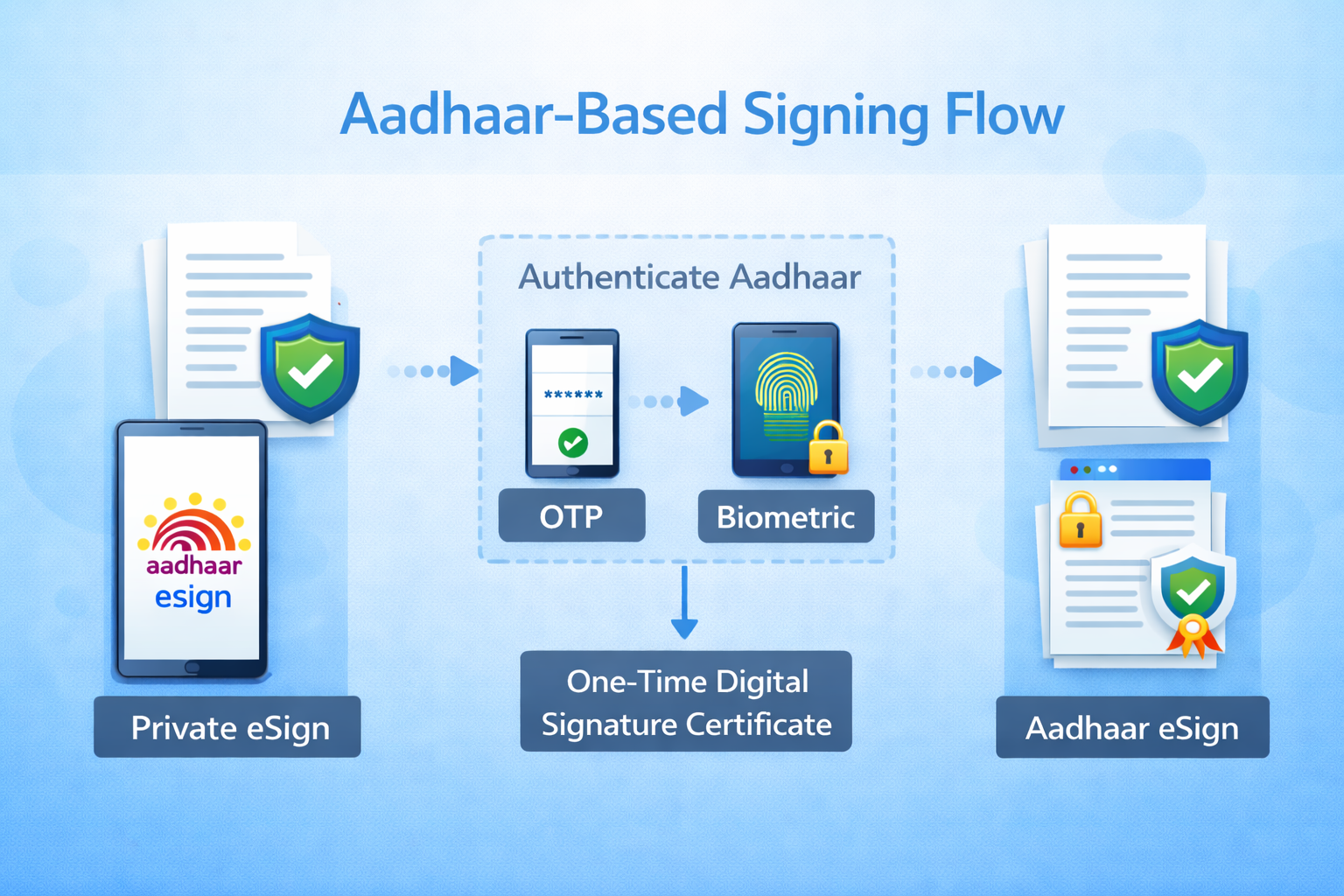
The Aadhaar eSign process typically involves:
- Aadhaar-based authentication
- OTP or biometric verification
- Generation of a one-time Digital Signature Certificate
After authentication, the document is digitally signed and the digitally signed document holds the same legal validity as a signed paper document as per Indian law. The certificate is generated only for that single transaction, and is not retained.
Aadhaar eSign has contributed greatly to the growth of paperless documentation in banking, telecom, and government services.
Did You Know?
Aadhaar eSign enables users to do legally valid digital signing without having a digital signature token or without installing any specific hardware.
Digital Signature vs eSignature vs Aadhaar eSign: Key Differences
While all three allow you to electronically sign, these are different in terms of operation and intended security levels.
Technology and Security
- eSignature: Broad category, security depends on platform features
- Digital Signature: Uses cryptography and certificates for high security
- Aadhaar eSign: Generates a secure digital signature upon Aadhaar authentication
Identity Verification
- eSignature: Email verification or login-based authentication
- Digital Signature: Certificate issued by a trusted authority
- Aadhaar eSign: Aadhaar-based OTP or biometric verification
Accessibility
- eSignature: Very easy to adopt and use
- Digital Signature: Requires certificate management
- Aadhaar eSign: Simple and remote-friendly for Indian users
The digital document routing can increase the speed of approval up to 80% higher that the traditional signing on paper.
Legal Validity of Digital Signature, eSignature, and Aadhaar eSign
In India, all three signing methods are recognized under the Information Technology Act, 2000, provided specific conditions are met.
These conditions generally include:
- Clear signer consent
- Reliable identity verification
- Protection against document tampering
Digital signatures offer the strongest legal assurance due to cryptographic validation. Aadhaar eSign is also legally valid and widely accepted for many transactions. Standard eSignatures are legally enforceable when supported by proper consent and audit trails.

Why Understanding These Differences Matters
Digital Signature vs eSignature vs Aadhaar eSign is something that organizations and individuals should know to pick the best option for their document requirements.
Certain paperwork needs higher assurance of identity and others emphasize on fast and easy accessibility. Choosing the right signing method for your needs increases efficiency, while ensuring compliance.
Clarity around these concepts for people at an awareness stage eliminates the confusion and enables them to make an informed decision.
Did You Know?
A lot of companies utilize multiple forms of electronic signing based on the sensitivity of the document and compliance implications.
The Role of Electronic Signing in a Paperless Future
Electronic signing has become a fundamental enabler of digital transformation. With the workflow automation of businesses, electronic signatures have been natively integrated into DMS, approval processes, and compliance systems.
Aadhaar eSign has accelerated digital adoption in India, while digital signatures continue to support high-trust environments. eSignatures bridge convenience and compliance for everyday business operations.
These techniques together enable secure, scalable, and paperless documentation.
Conclusion
Although often grouped together, Digital Signature, eSignature, and Aadhaar eSign serve distinct roles.
- eSignature focuses on intent and ease of use
- Digital Signature delivers high security and authenticity
- Aadhaar eSign offers accessible, Aadhaar-based digital signing
Knowing the differences is the first step in choosing the right digital signing method. With paper processes diminishing, electric signature methods will continue to define the way documents are signed, secured and managed.
Sign up for Free
Trial today!
Try KAiZEN for free

Nowadays enterprises and individuals are increasingly abandoning paper worksheets. The traditional signing process typically require print out the documents, sign them by hand, scan, and then mail back via email or courier. It is a lengthy process that holds up approvals, adds to operating expenses and makes it difficult to keep track of documents.
As organizations shift towards digital workflows, document signing methods have evolved too. Modern signing options are indispensable for documentation modernization, allowing for enhanced speed of approvals, increased visibility, and better compliance.
In this regard, there are three terms that are often mentioned, Digital Signature, eSignature and Aadhaar eSign. But while they are related, they’re not equal. Each has a different function, a different signing process, and a different level of security and validation.
This blog clearly explains what Digital Signature, eSignature, and Aadhaar eSign is and their key concepts and differences in a more structured manner.
What Is an eSignature?
An eSignature (Electronic Signature) is a general term that refers to any electronic method that shows the intention of a person to sign the contents of a document. The signer signs electronically rather than on pen and paper.
An eSignature can appear in several forms, including:
- A typed name added to a document
- A signature drawn with a mouse, stylus, or on a touchscreen
- A scanned image of a handwritten signature
- Clicking an “Accept” or “I Agree” button on a digital document
What defines an eSignature is not its appearance, but the intent behind it. If the signer expresses a clear intent to agree to the document and the system captures this intent, then that is considered an electronic signature.
eSignatures have become popular mainly because they are user friendly, fast and easy to implement. They help organizations reduce paperwork while keeping document workflows moving smoothly.
Everyday many online actions, such as approving policies or accepting terms and conditions, are legally considered eSignatures because they demonstrate clear user consent.
What Is a Digital Signature?
A Digital Signature is nothing but a Secure Type of E-signature. Digital signatures use cryptographic technology to prove the identity of the signer and ensure the document has not been altered, unlike regular eSignatures.
Digital signatures are generated using Public Key Infrastructure (PKI).This involves two keys:
- A private key, used by the signer
- A public key, used to verify the signature
When signing a document electronically, a unique digital fingerprint (hash) is created. This hash is encrypted with the private key of the signer. Then, any recipient can verify the signature with the public key associated to the signer’s digital certificate.
This process ensures:
- The signer’s identity is authenticated
- The document content remains unchanged
- The signature cannot be denied later
As a result of this high level of trust, digital signatures are commonly used for confidential or regulated documents.
Any change, even a minor one like an additional space or character, in a digitally signed document will immediately cause the signature to become invalid.
What Is Aadhaar eSign?
Aadhaar eSign is a kind of paperless digital signing process, it was introduced in India with an aim to enable broad based population for e signing. It enables an individual to digitally sign a document using his Aadhaar number, without the requirement of a physical USB or long-term digital certificate.
The Aadhaar eSign process typically involves:
- Aadhaar-based authentication
- OTP or biometric verification
- Generation of a one-time Digital Signature Certificate
After authentication, the document is digitally signed and the digitally signed document holds the same legal validity as a signed paper document as per Indian law. The certificate is generated only for that single transaction, and is not retained.
Aadhaar eSign has contributed greatly to the growth of paperless documentation in banking, telecom, and government services.
Did You Know?
Aadhaar eSign enables users to do legally valid digital signing without having a digital signature token or without installing any specific hardware.
Digital Signature vs eSignature vs Aadhaar eSign: Key Differences
While all three allow you to electronically sign, these are different in terms of operation and intended security levels.
Technology and Security
- eSignature: Broad category, security depends on platform features
- Digital Signature: Uses cryptography and certificates for high security
- Aadhaar eSign: Generates a secure digital signature upon Aadhaar authentication
Identity Verification
- eSignature: Email verification or login-based authentication
- Digital Signature: Certificate issued by a trusted authority
- Aadhaar eSign: Aadhaar-based OTP or biometric verification
Accessibility
- eSignature: Very easy to adopt and use
- Digital Signature: Requires certificate management
- Aadhaar eSign: Simple and remote-friendly for Indian users
The digital document routing can increase the speed of approval up to 80% higher that the traditional signing on paper.
Legal Validity of Digital Signature, eSignature, and Aadhaar eSign
In India, all three signing methods are recognized under the Information Technology Act, 2000, provided specific conditions are met.
These conditions generally include:
- Clear signer consent
- Reliable identity verification
- Protection against document tampering
Digital signatures offer the strongest legal assurance due to cryptographic validation. Aadhaar eSign is also legally valid and widely accepted for many transactions. Standard eSignatures are legally enforceable when supported by proper consent and audit trails.
Why Understanding These Differences Matters
Digital Signature vs eSignature vs Aadhaar eSign is something that organizations and individuals should know to pick the best option for their document requirements.
Certain paperwork needs higher assurance of identity and others emphasize on fast and easy accessibility. Choosing the right signing method for your needs increases efficiency, while ensuring compliance.
Clarity around these concepts for people at an awareness stage eliminates the confusion and enables them to make an informed decision.
Did You Know?
A lot of companies utilize multiple forms of electronic signing based on the sensitivity of the document and compliance implications.
The Role of Electronic Signing in a Paperless Future
Electronic signing has become a fundamental enabler of digital transformation. With the workflow automation of businesses, electronic signatures have been natively integrated into DMS, approval processes, and compliance systems.
Aadhaar eSign has accelerated digital adoption in India, while digital signatures continue to support high-trust environments. eSignatures bridge convenience and compliance for everyday business operations.
These techniques together enable secure, scalable, and paperless documentation.
Conclusion
Although often grouped together, Digital Signature, eSignature, and Aadhaar eSign serve distinct roles.
- eSignature focuses on intent and ease of use
- Digital Signature delivers high security and authenticity
- Aadhaar eSign offers accessible, Aadhaar-based digital signing
Knowing the differences is the first step in choosing the right digital signing method. With paper processes diminishing, electric signature methods will continue to define the way documents are signed, secured and managed.
Sign up for Free
Trial today!
Try KAiZEN for free