
What Is an eSignature? A Complete Guide for Enterprises in 2026

What Is an eSignature? A Complete Guide for Enterprises in 2026
eSignature for Enterprises is transforming how businesses across industries move away from paper-based processes. Manual signing procedures delay approval, add cost, and make document tracking a challenge. With the move towards digital workflows in organisations, the signing of documents has also evolved.
An eSignature or Electronic Signature is a way to sign documents electronically. It enables faster processing, collaboration at a distance, and improved record keeping. For the modern business, the change is about more than just convenience. It is about efficiency, compliance, and scale.
This blog explains what an eSignature is, how it works, and why it has become an essential part of enterprise operations.
What Is an eSignature?
An eSignature is a digital method used to sign a document electronically. It represents a signer’s intent to agree to the contents of a document. Instead of using pen and paper, the signer completes the action through an electronic process.
An Electronic Signature can appear in different forms, such as,
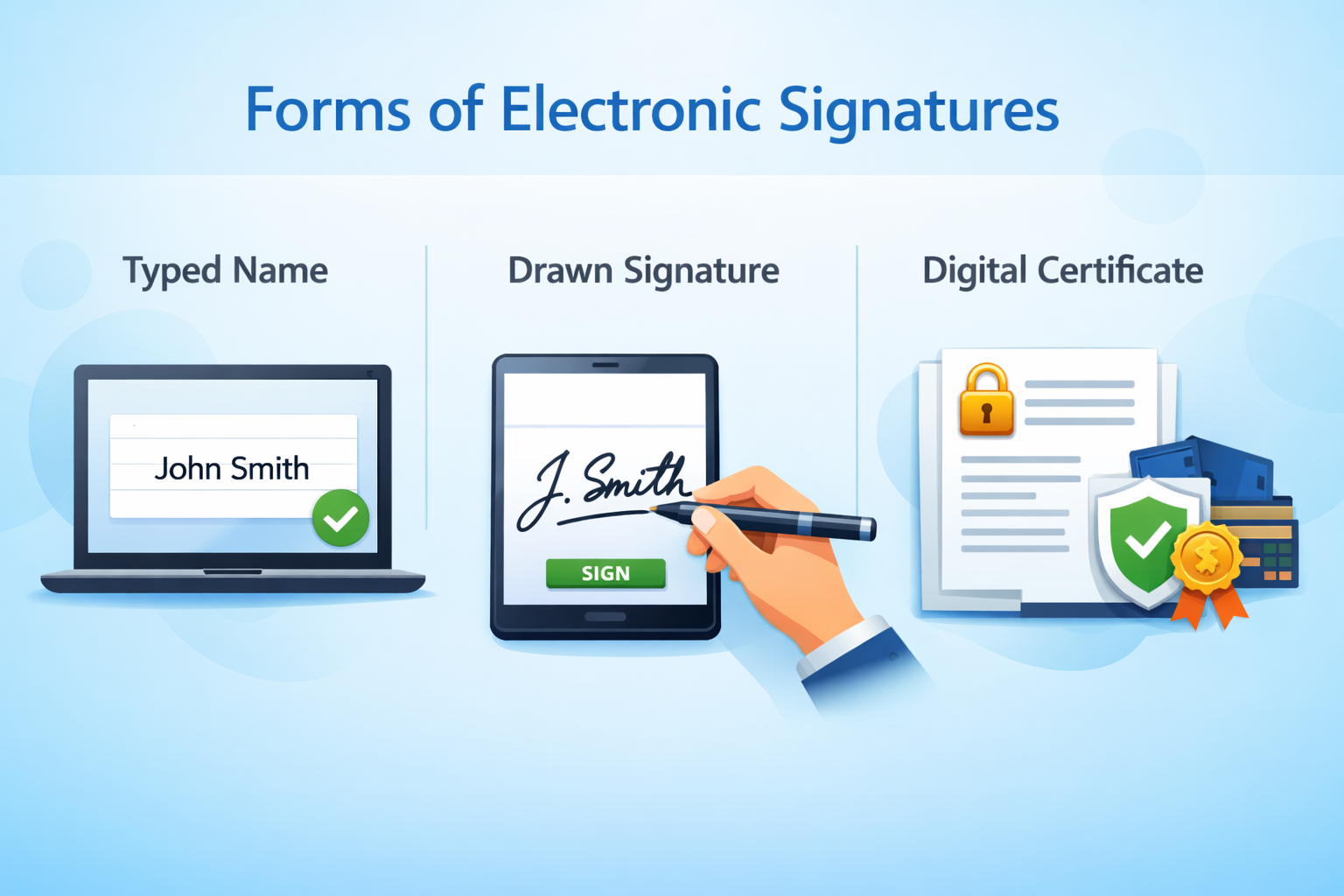
The intent to sign is more important than what the signature looks like. The purpose is that when a person signs a document with an agreement over it, he agrees with the content of the document and the process follows its legal regulations.
Did You Know?
According to multiple industry studies, businesses that shift from paper-based signing to electronic signatures reduce document turnaround time by more than 70%. In many cases, agreements that once took days to complete are finalized within hours.
How Does an eSignature Work?
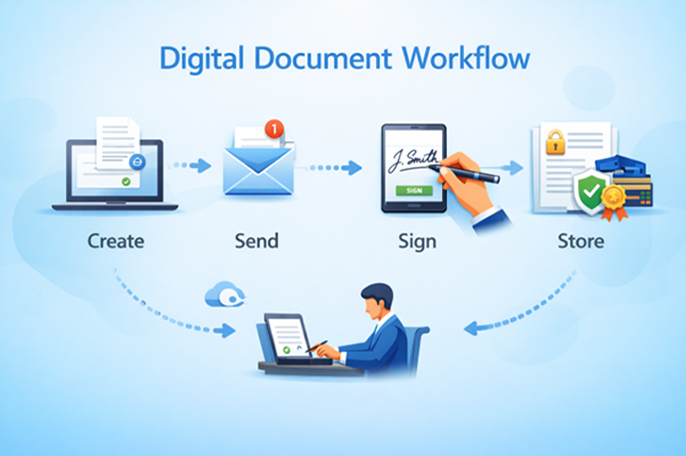
The eSignature process follows a clear and structured flow.
First, a document is uploaded to an eSignature tool. The sender creates the document by adding necessary fields, including signature, date, or text fields. After the document is ready, it is delivered to the signer via email or a secure link.
The signer opens the document, reads through the content, and signs electronically. When the signing process is complete, the document is sent back to the system and the status is updated to completed.
A crucial part of this process is recordkeeping. Most eSignature tools create an audit trail. This record captures details such as:
- Time and date of signing
- Email address of the signer
- IP address or device details
- Actions taken during the signing process
The final form and the associated audit trail are then securely stored for later use.
Are eSignatures Legally Valid?
Yes, eSignatures are legally binding in many countries. The governments have implemented regulations to facilitate electronic transactions and electronic agreements. Electronic signatures have been accepted as valid for over 20 years in many jurisdictions. The U.S. ESIGN Act was enacted in 2000, preceding the rest of the world in embracing the concept of the digital contract.
Some widely recognized frameworks include:
- Information Technology Act (India)
- ESIGN Act (United States)
- eIDAS Regulation (European Union)
These governing regulations are a testament to the fact that Electronic Signature has the same legal weight as a wet ink signature, when certain requirements are fulfilled. These are typically signer consent, identity verification, and document integrity.
For the enterprises, the legal effect is not an option. Employing a compliant eSignature tool makes sure that signed documents can endure audits, disputes, and compliance verifications.
Why Enterprises Are Adopting Electronic Signatures
Large companies process thousands of documents annually. Contracts, approvals, HR forms, and vendor agreements typically require the attention of several parties. This procedure is time consuming and prone to mistakes when using manual signing methods.
- Faster Turnaround Time: An eSignature cuts down on the time needed to finalize contracts. Files can be signed in a matter of minutes rather than days. This enables teams to close deals and finish approvals more quickly.
- Support for Remote and Global Teams: Modern enterprises operate over locations and time zones. An eSignature for enterprises enables signing documents from anywhere, without having to be physically present.
- Cost Reduction: Printing, scanning, courier delivery and storage on site are additional operational expenses. Businesses can reduce their document costs by $4 to $10 per document by using eSignatures rather than paper-based ones.
- Improved Accuracy: Processing on paper leads to errors such as missing signatures or wrong dates. An Electronic Signature workflow directs signers and minimizes manual error.
- Stronger Compliance and Tracking: With time stamps and audit trails, businesses have more insight into the status of documents. This improves compliance and simplifies internal reviews.
Key Features of an Enterprise eSignature Solution
Not all eSignature platforms are designed for large organizations. An eSignature for enterprises must support scale, security, and integration.
- Security and Encryption: Professional-quality eSignature tools encrypt documents during transmission and while stored. That keeps sensitive data safe.
- Identity Verification: Identity verifications such as email verification, OTP, or certificate based signing assists in verifying the signer’s identity.
- Audit Trails: A full detailed audit log lets you know about every activity on document. This is critical for legal, compliance and audit considerations.
- Workflow Management: Businesses may need sequential or parallel signing. Workflow controls enable documents to be directed to the appropriate individuals in the proper sequence.
- Integrations with Enterprise Systems: Integration with CRM, ERP, HR and document management systems minimizes manual effort and enhances operational efficiency.
- Scalability: A business eSignature tool should be able to handle a large number of documents and expanding users without lag in its performance.
Many large enterprises process millions of documents each year, and even small improvements in signing efficiency can result in significant cost and time savings at scale.
The Future of eSignatures in Enterprises
Digital contracts are now being widely adopted across all industries. With organizations automating more processes, eSignatures are becoming a more integral part of end-to-end workflows.
Automation minimizes manual processes for document preparation and approval. Integration with business applications provides better flow of data and visibility. Enterprises are using advanced analytics to monitor performance and locate bottlenecks.
In the long term, Electronic Signatures will not only replace paper but also support smarter decision-making. Enterprises that adopt eSignature solutions early gain flexibility and operational clarity.
Conclusion
A eSignature is not just a digital version of a handwritten signature anymore. It is a fundamental part of enterprise today. From faster approvals to improved compliance, the advantages are tangible.
When it comes to companies that are at the awareness stage, knowing How an Electronic Signature Works is the first step. With growing amounts of documentation and increasingly dispersed teams, the enterprise use of eSignatures is both the sensible and strategic option.
By choosing the right eSignature for Enterprises , enterprises can simplify document workflows, reduce risk, and support long-term digital transformation.
Sign up for Free
Trial today!
Try KAiZEN for free

What Is an eSignature? A Complete Guide for Enterprises in 2026
eSignature for Enterprises is transforming how businesses across industries move away from paper-based processes. Manual signing procedures delay approval, add cost, and make document tracking a challenge. With the move towards digital workflows in organisations, the signing of documents has also evolved.
An eSignature or Electronic Signature is a way to sign documents electronically. It enables faster processing, collaboration at a distance, and improved record keeping. For the modern business, the change is about more than just convenience. It is about efficiency, compliance, and scale.
This blog explains what an eSignature is, how it works, and why it has become an essential part of enterprise operations.
What Is an eSignature?
An eSignature is a digital method used to sign a document electronically. It represents a signer’s intent to agree to the contents of a document. Instead of using pen and paper, the signer completes the action through an electronic process.
An Electronic Signature can appear in different forms, such as,
The intent to sign is more important than what the signature looks like. The purpose is that when a person signs a document with an agreement over it, he agrees with the content of the document and the process follows its legal regulations.
Did You Know?
According to multiple industry studies, businesses that shift from paper-based signing to electronic signatures reduce document turnaround time by more than 70%. In many cases, agreements that once took days to complete are finalized within hours.
How Does an eSignature Work?
The eSignature process follows a clear and structured flow.
First, a document is uploaded to an eSignature tool. The sender creates the document by adding necessary fields, including signature, date, or text fields. After the document is ready, it is delivered to the signer via email or a secure link.
The signer opens the document, reads through the content, and signs electronically. When the signing process is complete, the document is sent back to the system and the status is updated to completed.
A crucial part of this process is recordkeeping. Most eSignature tools create an audit trail. This record captures details such as:
- Time and date of signing
- Email address of the signer
- IP address or device details
- Actions taken during the signing process
The final form and the associated audit trail are then securely stored for later use.
Are eSignatures Legally Valid?
Yes, eSignatures are legally binding in many countries. The governments have implemented regulations to facilitate electronic transactions and electronic agreements. Electronic signatures have been accepted as valid for over 20 years in many jurisdictions. The U.S. ESIGN Act was enacted in 2000, preceding the rest of the world in embracing the concept of the digital contract.
Some widely recognized frameworks include:
- Information Technology Act (India)
- ESIGN Act (United States)
- eIDAS Regulation (European Union)
These governing regulations are a testament to the fact that Electronic Signature has the same legal weight as a wet ink signature, when certain requirements are fulfilled. These are typically signer consent, identity verification, and document integrity.
For the enterprises, the legal effect is not an option. Employing a compliant eSignature tool makes sure that signed documents can endure audits, disputes, and compliance verifications.
Why Enterprises Are Adopting Electronic Signatures
Large companies process thousands of documents annually. Contracts, approvals, HR forms, and vendor agreements typically require the attention of several parties. This procedure is time consuming and prone to mistakes when using manual signing methods.
- Faster Turnaround Time: An eSignature cuts down on the time needed to finalize contracts. Files can be signed in a matter of minutes rather than days. This enables teams to close deals and finish approvals more quickly.
- Support for Remote and Global Teams: Modern enterprises operate over locations and time zones. An eSignature for enterprises enables signing documents from anywhere, without having to be physically present.
- Cost Reduction: Printing, scanning, courier delivery and storage on site are additional operational expenses. Businesses can reduce their document costs by $4 to $10 per document by using eSignatures rather than paper-based ones.
- Improved Accuracy: Processing on paper leads to errors such as missing signatures or wrong dates. An Electronic Signature workflow directs signers and minimizes manual error.
- Stronger Compliance and Tracking: With time stamps and audit trails, businesses have more insight into the status of documents. This improves compliance and simplifies internal reviews.
Key Features of an Enterprise eSignature Solution
Not all eSignature platforms are designed for large organizations. An eSignature for enterprises must support scale, security, and integration.
- Security and Encryption: Professional-quality eSignature tools encrypt documents during transmission and while stored. That keeps sensitive data safe.
- Identity Verification: Identity verifications such as email verification, OTP, or certificate based signing assists in verifying the signer’s identity.
- Audit Trails: A full detailed audit log lets you know about every activity on document. This is critical for legal, compliance and audit considerations.
- Workflow Management: Businesses may need sequential or parallel signing. Workflow controls enable documents to be directed to the appropriate individuals in the proper sequence.
- Integrations with Enterprise Systems: Integration with CRM, ERP, HR and document management systems minimizes manual effort and enhances operational efficiency.
- Scalability: A business eSignature tool should be able to handle a large number of documents and expanding users without lag in its performance.
Many large enterprises process millions of documents each year, and even small improvements in signing efficiency can result in significant cost and time savings at scale.
The Future of eSignatures in Enterprises
Digital contracts are now being widely adopted across all industries. With organizations automating more processes, eSignatures are becoming a more integral part of end-to-end workflows.
Automation minimizes manual processes for document preparation and approval. Integration with business applications provides better flow of data and visibility. Enterprises are using advanced analytics to monitor performance and locate bottlenecks.
In the long term, Electronic Signatures will not only replace paper but also support smarter decision-making. Enterprises that adopt eSignature solutions early gain flexibility and operational clarity.
Conclusion
A eSignature is not just a digital version of a handwritten signature anymore. It is a fundamental part of enterprise today. From faster approvals to improved compliance, the advantages are tangible.
When it comes to companies that are at the awareness stage, knowing How an Electronic Signature Works is the first step. With growing amounts of documentation and increasingly dispersed teams, the enterprise use of eSignatures is both the sensible and strategic option.
By choosing the right eSignature for Enterprises , enterprises can simplify document workflows, reduce risk, and support long-term digital transformation.
Sign up for Free
Trial today!
Try KAiZEN for free